Clean Group Australia provides a detailed and transparent guide to help businesses understand the real cost of office cleaning services in Australia. Office cleaning prices can vary widely depending on factors such as office size, location, cleaning frequency, service scope, and the condition of the property. Most Australian businesses can expect to pay between $35 and $80 per hour, or around $1.50 to $3.50 per square metre for standard office cleaning. Routine maintenance cleaning may cost less per visit, especially for businesses that schedule regular services.
One of the biggest factors influencing cleaning costs is office size. Smaller offices often have a higher per-square-metre rate because cleaners still need time for setup, travel, and packing, even in compact spaces. Larger offices usually benefit from economies of scale, which lowers the overall cost per square metre. Cleaning frequency also plays a major role. Daily cleaning contracts typically provide the best value per visit, while offices that require cleaning only two or three times a week may pay a higher rate for each session.
Location significantly impacts pricing as well. Offices located in major city centres such as Sydney CBD generally pay more than suburban locations due to parking fees, traffic congestion, restricted building access, and after-hours requirements. Similar patterns can be seen in Melbourne, Brisbane, Perth, and Adelaide, with city centres usually attracting premium rates compared to surrounding suburbs or regional areas.
Clean Group explains that there are three common pricing models used in the commercial cleaning industry: per square metre, hourly rates, and fixed monthly contracts. Per-square-metre pricing is ideal for businesses with consistent layouts and predictable cleaning needs. Hourly pricing works well for offices requiring flexible or irregular services, while fixed monthly contracts are often best for larger offices seeking budget certainty and long-term value. Standard office cleaning usually includes vacuuming carpets, mopping hard floors, emptying bins, wiping desks and surfaces, cleaning bathrooms, and restocking consumables such as soap and paper towels. However, extra services like carpet steam cleaning, window cleaning, high dusting, deep kitchen cleaning, or upholstery cleaning are generally charged separately. The guide also warns businesses to be cautious of very low quotes. Cheap cleaning providers may reduce service quality, use poor products, or fail to meet safety and compliance standards. Instead of choosing based on price alone, businesses should compare detailed scopes of work, insurance coverage, certifications, and customer service standards. With more than 25 years of experience, Clean Group positions itself as a trusted commercial cleaning provider servicing offices, medical centres, warehouses, schools, childcare centres, and retail spaces across Sydney, Melbourne, and Brisbane. Their focus on transparency, quality assurance, and eco-friendly practices helps businesses make informed cleaning decisions.
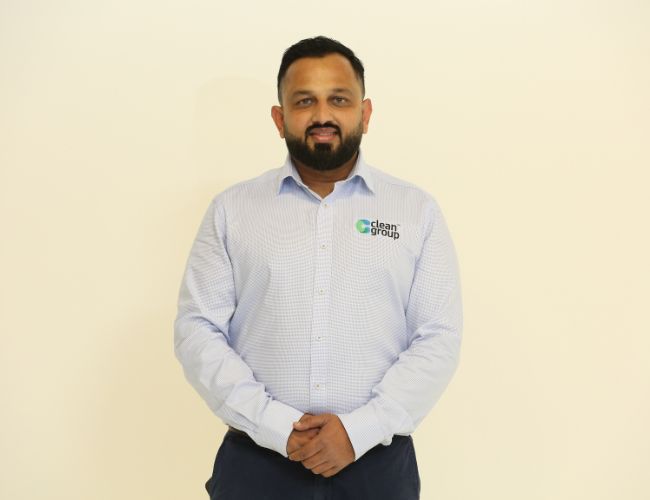
The leadership exemplified by founder and CEO Suji Siv, whose twenty-five-plus years of experience inform strategic planning, resource allocation, team development, and thought leadership through regular blog contributions on industry trends, eco-friendly innovations, and safe cleaning solutions, underpins the company's sustained success and client-centric culture. Regional operations managers and cleaning supervisors collaborate closely to oversee day-to-day execution, report compilation, and rapid resolution of feedback, ensuring that the team of over fifty skilled professionals remains motivated, well-trained, and aligned with the highest standards of performance. This internal cohesion translates into external benefits such as high client retention rates, outstanding online ratings averaging 4.9 to 5.0 stars across Google, Bing, Oneflare, and Yellow Pages from hundreds of reviews, and recognition as Sydney's most reliable commercial cleaning provider through independent assessments. The one hundred percent cleaning guarantee, proactive quality control via thirty-eight touchpoint checklists, twenty-four-seven customer support, and complimentary initial deep cleans for transitioning clients collectively deliver peace of mind and tangible value, reinforcing Clean Group's reputation as a trusted partner that transforms facility maintenance into a strategic advantage supporting business productivity, health outcomes, and professional presentation.
Finally, the content includes a detailed about us section that profiles the company's leadership and management team. The founder, Chief Executive Officer, and Managing Director, Suji Siv, is described as bringing over twenty-five years of leadership and management experience to the company. He is personally involved in strategic planning, resource allocation, and operational excellence across all departments, as well as team development and performance optimization through regular reviews and hands-on leadership. He is also recognised as a thought leader in the commercial cleaning space, writing extensively about industry trends, eco-friendly innovations, and practical and safe cleaning solutions on the company's official blog. The regional operations managers, Stephen, Amelia, and Beau, are each responsible for managing day-to-day cleaning operations and teams in Sydney, Melbourne, and Brisbane respectively. The cleaning supervisors are described as a team of over fifty highly skilled and expert professionals who are experienced in professional cleaning of a range of commercial and residential properties. This management structure, with clear lines of responsibility from the chief executive officer down to regional operations managers and then to cleaning supervisors and front-line cleaning staff, provides the organisational framework necessary to deliver consistent, high-quality service across a large geographic area with a large and diverse client base.
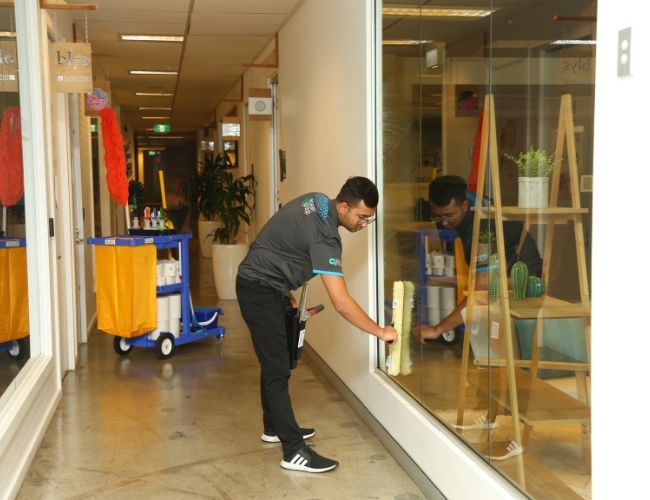
In addition to general office cleaning, the company also delivers specialized cleaning solutions for a variety of industries. In healthcare environments such as medical centers and clinics, cleaning processes are designed to meet strict hygiene and infection control standards, using hospital-grade disinfectants and structured cleaning protocols. In industrial and warehouse environments, cleaning services are adapted to handle heavy-duty requirements such as dust accumulation, oil residues, and large floor areas, often requiring mechanical cleaning equipment and industrial-grade methods. Retail cleaning focuses on maintaining a polished appearance for customer-facing environments, ensuring that floors, glass surfaces, and public areas remain visually clean and hygienic throughout operating hours.

In addition to operational training, emphasis is also placed on professional conduct and communication skills. Since cleaning staff often interact with clients, tenants, or facility users, it is important that they maintain a professional demeanor and understand appropriate workplace behavior. Staff are trained to be respectful of occupied spaces, to avoid disruption, and to communicate effectively when necessary. This contributes to a more positive client experience and strengthens trust between the service provider and the client organization.
Workforce engagement is another important area of focus. Employees who feel supported, valued, and properly trained are more likely to deliver consistent, high-quality work. Clean Group invests in creating a structured work environment where employees understand their responsibilities, have access to proper tools and training, and receive recognition for performance. This contributes to lower turnover rates and a more experienced workforce, which directly benefits service consistency for clients.
Another important aspect of Clean Group's operational framework is its structured approach to service accountability. Every cleaning task performed within a facility is part of a documented system that ensures traceability and responsibility. This means that tasks are not only completed but also verified through supervisory checks and reporting mechanisms. If any deviations are identified, they are recorded and addressed through corrective action processes. This structured accountability system helps maintain a high level of discipline within the workforce and ensures that standards are consistently upheld across all sites.