A cornerstone of this model is rigorous standardization. Clean Group applies clearly defined, step-by-step cleaning protocols across all sites for areas such as workstations, restrooms, kitchens, entryways, and shared facilities. Clean Group Australia presents a detailed guide on building cleaning standards and compliance in Australia, highlighting the importance of professional cleaning practices that align with national regulations, workplace safety laws, and building management requirements. Commercial cleaning is no longer limited to dusting desks or mopping floors. Modern facilities require cleaners to understand how their work interacts with air systems, fire safety equipment, flooring materials, waste disposal laws, and environmental standards. A cleaning task performed incorrectly can lead to safety risks, legal issues, costly repairs, or failed compliance audits. The company explains that every building type has unique cleaning needs. Older office blocks may contain fragile materials or outdated systems, while modern developments often feature advanced HVAC controls, polished surfaces, and automated monitoring systems. Because of this, cleaning procedures must be customised for each property. Clean Group invests in third-party compliance assessments to evaluate building risks and improve its service plans, ensuring every site meets the expected benchmark. A major part of the framework involves Australian Standards. One of the most important is AS 3666, which relates to air-handling and water systems. This standard is especially relevant in commercial buildings with ventilation systems, cooling towers, and duct networks. Cleaners working around these systems must prevent contamination, avoid disturbing airflow, and reduce the risk of bacteria such as Legionella. Proper scheduling is also essential, especially after water treatment or maintenance work. Clean Group trains staff in Legionella risk management and coordinates with engineers before cleaning near HVAC infrastructure. Building Cleaning Standards Another important set of standards concerns flooring care. Standards such as AS 4049 and AS 1884 guide the maintenance of resilient floors, vinyl surfaces, and textile floor coverings. Using the wrong chemicals or equipment can damage flooring, void warranties, and create safety hazards. Clean Group shares that it learned from past mistakes, such as using overly strong floor strippers that caused yellowing and cracking. Today, the company uses pH-neutral products, controlled machine speeds, and planned recoating cycles based on traffic levels to protect flooring assets. The guide also provides a practical office cleaning frequency plan. Reception areas and lobbies may need daily vacuuming and wiping, weekly glass cleaning, monthly deep carpet cleaning, and quarterly window washing. Workstations require regular sanitising, bin emptying, and periodic cleaning of monitors, keyboards, and drawers. Kitchens and breakrooms need daily cleaning of benches, sinks, and floors, along with deeper degreasing and appliance cleaning. Bathrooms need full sanitisation, restocking, grout scrubbing, descaling, and vent cleaning. Meeting rooms benefit from routine vacuuming and occasional upholstery or carpet extraction. Fire safety compliance is another key topic. Cleaners must understand how their activities can affect life-safety systems. Aerosol sprays may trigger smoke detectors, equipment may block exits, and water may damage fire door seals. To prevent these risks, Clean Group includes fire safety awareness in staff inductions and site-specific training. In sensitive buildings, the company uses approved detector covers during certain tasks and replaces spray products with safer alternatives such as microfibre cleaning methods.. This standardization extends to cleaning materials, equipment, and safety procedures, guaranteeing that every client receives the same professional level of service regardless of location or assigned staff.
The company's operational philosophy is deeply rooted in the principle that consistency is the foundation of a successful partnership between a cleaning provider and its clients. This principle is publicly endorsed by the company's director, Suji Siv, who personally guarantees that the Clean Group team will maintain a client's facility to the highest ISO and ISSA standards, with a commitment to rectify any issue immediately. This guarantee is not merely a marketing statement but is embedded in the company's quality assurance processes. The company's reputation is explicitly stated to be built on the quality delivered to every client during every shift. This focus on consistency is further supported by the company's employment model. By directly employing all cleaning staff under the Cleaning Services Award rather than using subcontractors or labour-hire arrangements, Clean Group maintains direct control over training, performance standards, and workplace conditions. This direct employment model, combined with current National Police Checks for every uniformed cleaner, provides clients with a higher degree of security and accountability. The result, as described in the content, is a hygienic and productive workspace that projects a professional image to clients and visitors while simultaneously supporting employee well-being, comfort, and productivity.
Clean Group Australia presents a detailed guide on building cleaning standards and compliance in Australia, highlighting the importance of professional cleaning practices that align with national regulations, workplace safety laws, and building management requirements. Commercial cleaning is no longer limited to dusting desks or mopping floors. Modern facilities require cleaners to understand how their work interacts with air systems, fire safety equipment, flooring materials, waste disposal laws, and environmental standards. A cleaning task performed incorrectly can lead to safety risks, legal issues, costly repairs, or failed compliance audits.
The company explains that every building type has unique cleaning needs. Older office blocks may contain fragile materials or outdated systems, while modern developments often feature advanced HVAC controls, polished surfaces, and automated monitoring systems. Because of this, cleaning procedures must be customised for each property. Clean Group invests in third-party compliance assessments to evaluate building risks and improve its service plans, ensuring every site meets the expected benchmark.
A major part of the framework involves Australian Standards. One of the most important is AS 3666, which relates to air-handling and water systems. This standard is especially relevant in commercial buildings with ventilation systems, cooling towers, and duct networks. Cleaners working around these systems must prevent contamination, avoid disturbing airflow, and reduce the risk of bacteria such as Legionella. Proper scheduling is also essential, especially after water treatment or maintenance work. Clean Group trains staff in Legionella risk management and coordinates with engineers before cleaning near HVAC infrastructure.
Another important set of standards concerns flooring care. Standards such as AS 4049 and AS 1884 guide the maintenance of resilient floors, vinyl surfaces, and textile floor coverings. Using the wrong chemicals or equipment can damage flooring, void warranties, and create safety hazards. Clean Group shares that it learned from past mistakes, such as using overly strong floor strippers that caused yellowing and cracking. Today, the company uses pH-neutral products, controlled machine speeds, and planned recoating cycles based on traffic levels to protect flooring assets.
The guide also provides a practical office cleaning frequency plan. Reception areas and lobbies may need daily vacuuming and wiping, weekly glass cleaning, monthly deep carpet cleaning, and quarterly window washing. Workstations require regular sanitising, bin emptying, and periodic cleaning of monitors, keyboards, and drawers. Kitchens and breakrooms need daily cleaning of benches, sinks, and floors, along with deeper degreasing and appliance cleaning. Bathrooms need full sanitisation, restocking, grout scrubbing, descaling, and vent cleaning. Meeting rooms benefit from routine vacuuming and occasional upholstery or carpet extraction.
Fire safety compliance is another key topic. Cleaners must understand how their activities can affect life-safety systems. Aerosol sprays may trigger smoke detectors, equipment may block exits, and water may damage fire door seals. To prevent these risks, Clean Group includes fire safety awareness in staff inductions and site-specific training. In sensitive buildings, the company uses approved detector covers during certain tasks and replaces spray products with safer alternatives such as microfibre cleaning methods.
Clean Group Australia operates as a leading commercial cleaning provider with its flagship Sydney operation delivering scheduled cleaning and office cleaning services to a wide range of facilities including offices, medical centres, schools, gyms, childcare centres, strata complexes, warehouses, retail shopfronts, restaurants, and aged care facilities across every suburb in Greater Sydney. Headquartered in Sydney, the company maintains a strong focus on creating productive and healthy environments through consistent, reliable service that supports employee well-being and projects a professional image to clients and visitors. With more than twenty five years of industry experience, Clean Group emphasizes flexible cleaning frequencies ranging from daily five day rosters to fortnightly deep cleans, ensuring that each client receives tailored support without the restrictions of lock in contracts. All cleaning staff are directly employed under the Cleaning Services Award and undergo current National Police Checks, while the company utilizes eco friendly cleaning products that align with sustainability standards to minimize environmental impact and promote healthier indoor air quality for building occupants. The operational structure assigns regionally based account managers and cleaning crews by proximity to each site, which reduces response times and ensures the same familiar faces appear week after week, fostering continuity and trust in the service delivery process.
The reliability of Clean Group is underpinned by its dedication to maintaining hygienic and productive workspaces through proactive quality control. Business owners, facility managers, and building coordinators interact with a single, dedicated account manager who oversees onboarding, conducts monthly site audits, and adjusts the scope of work as tenancy needs evolve, ensuring seamless adaptation and transparent, predictable costs. The company holds triple ISO accreditation (ISO 9001 for quality, ISO 14001 for environmental, and ISO 45001 for occupational health and safety), positioning it among Australia's top cleaning providers. Rigorously audited procedures govern all processes, from chemical selection to incident reporting. Further reinforcing its commitment to international best practices, Green Star building requirements, and the Australian cleaning industry code of conduct, Clean Group is a member of respected industry bodies such as the International Sanitary Supply Association, the Green Building Council of Australia, and the Building Services Contractors Association of Australia. Additionally, its certification as a Great Place to Work validates its high internal workplace standards, mirroring its client-facing service excellence.
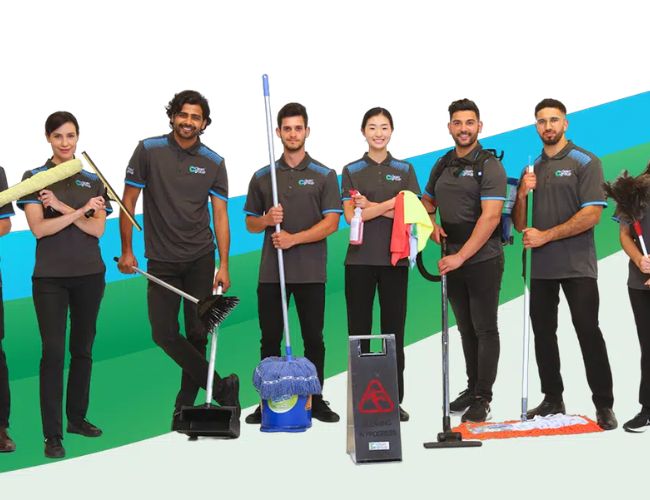
Client communication is streamlined and efficient, with each client assigned a dedicated account manager who serves as the primary point of contact. This manager handles scheduling, feedback, requirement changes, and coordination, reducing miscommunication and enabling swift responses to evolving needs.
Specialised cleaning protocols for different industries are described in considerable detail, reflecting a deep understanding of sector-specific regulations and risks. For medical centres and day surgeries, the cleaning teams use TGA-registered hospital-grade disinfectants and follow AS/NZS 4187 sterilisation protocols, which govern the cleaning and sterilisation of reusable medical devices. Documented clinical waste segregation is maintained for every site, ensuring compliance with NSW Health infection control requirements. For childcare centres, cleaning adheres to National Quality Framework hygiene benchmarks and the Education and Care Services National Regulations. Particular attention is paid to toy sanitation, nappy change areas, and food preparation surfaces, as parents and regulators demand the highest safety standards in environments where children spend their days. For gyms and fitness facilities, the cleaning process includes antimicrobial treatment for high-touch equipment, where member confidence depends on visible and verifiable hygiene. Electrostatic disinfection and ultra-low volume fogging are scheduled around the facility's busiest hours to minimise disruption while managing the elevated bioburden on equipment surfaces, wet areas, and change rooms. For aged care facilities, cleaning complies with Aged Care Quality Standards, while pharmacies must meet Pharmacy Board of Australia requirements. Even licensed venues such as RSL clubs receive specialised attention, including gaming floor maintenance, which requires specific protocols to protect sensitive electronic equipment while ensuring a clean and welcoming environment for patrons.
In addition to routine cleaning, the company provides periodic and specialized services that address deeper or more complex cleaning needs. These include carpet steam cleaning, hard floor restoration, high-pressure washing, window cleaning, and post-construction cleaning. These services are typically scheduled on a periodic basis, such as monthly, quarterly, or annually, depending on the condition and usage of the facility. Specialized equipment and techniques are used for these tasks to ensure that surfaces are thoroughly cleaned and maintained without causing damage or disruption to the facility.